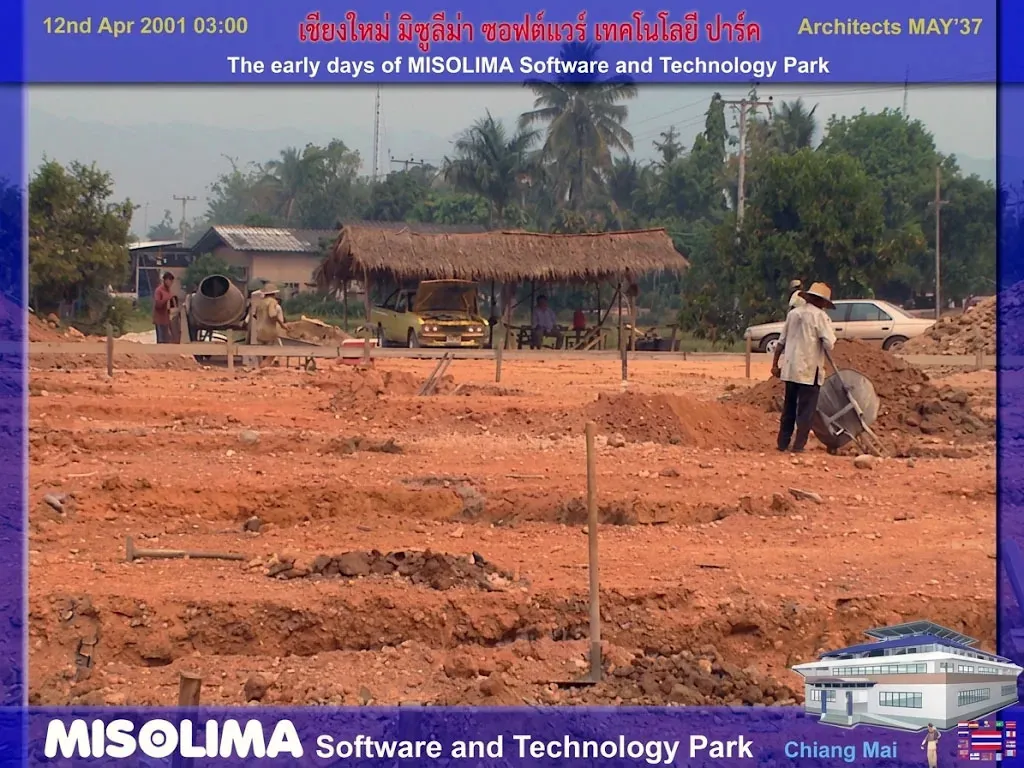
12th April 2001 - Preparing the footing.
The Foundation Footings
The foundation footings were carefully prepared using a two-level square design, consisting of a large lower section and a smaller square section above it. Each footing was designed to withstand a load of more than 22 tonnes, providing the strength and stability required to support the substantial two-storey building.
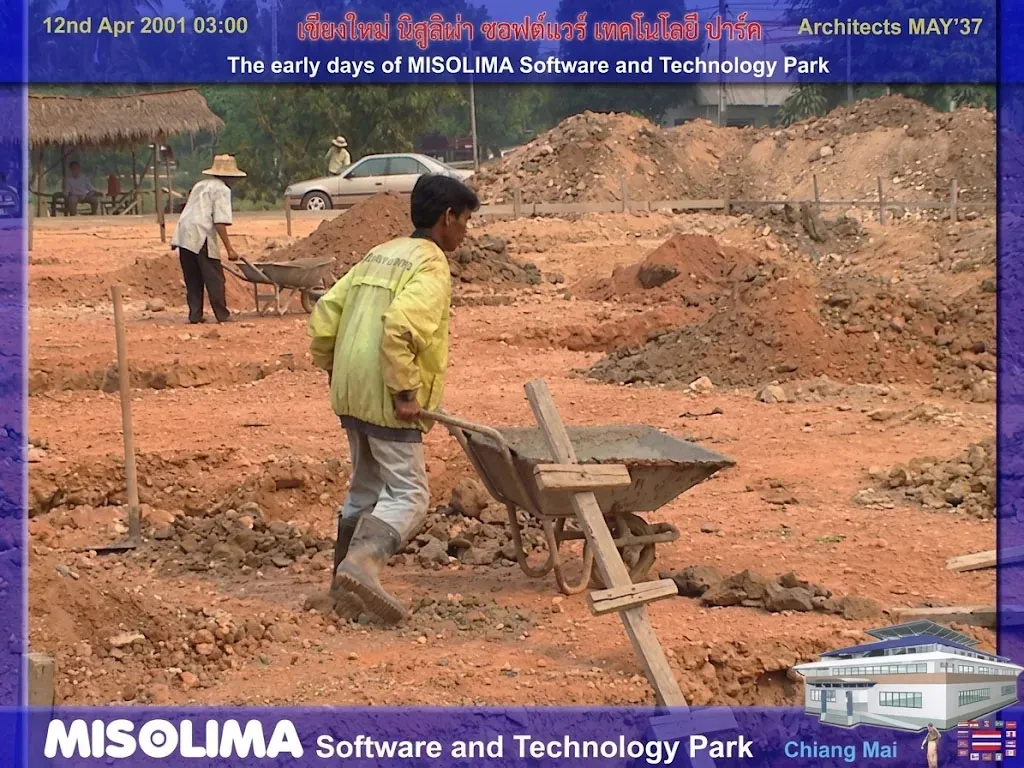
12th April 2001 - Pouring the First Layer of Concrete
With so many foundation footings to fill, the most practical solution was to use wheelbarrows to transport and pour the first layer of concrete into each footing. It was physically demanding work, requiring considerable effort to move the concrete from one footing to another. The task took an entire day to complete, making it a long and exhausting day for everyone involved.
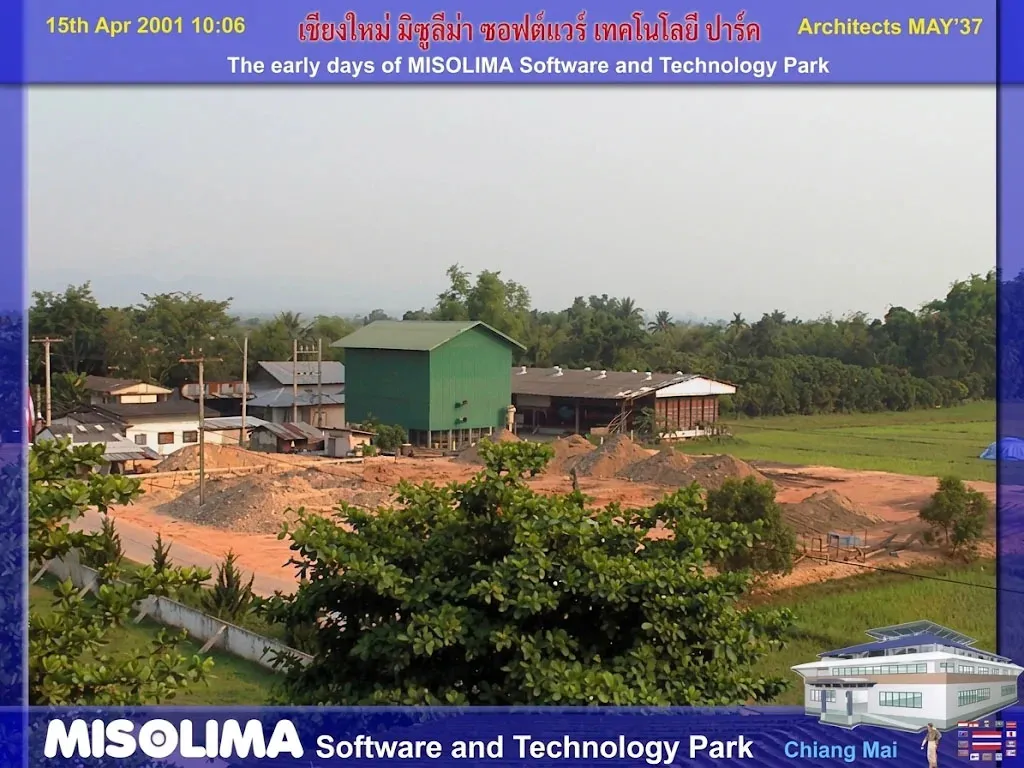
15th April 2001 - Preparation work
The Beginning of MISOLIMA Software and Technology Park
The story of MISOLIMA Software and Technology Park in Chiang Mai, Thailand, began long before the Internet boom.
Originally conceived under the name "CMPEG – Cyber Media Park for e-Gravity", the project was envisioned as a place where technology, software development and innovation could come together.
In those early days, half of the land was cleared in preparation for the construction of a substantial two-storey building, designed to provide approximately 800 m² of floor space on each level, giving a total built-up area of 1,600 m².
The estimated construction cost at the time was 20 million Thai Baht.
It was an ambitious undertaking, reflecting a vision of what the future of software and technology could become in Northern Thailand. The foundations of that vision were laid well before the digital world we know today.
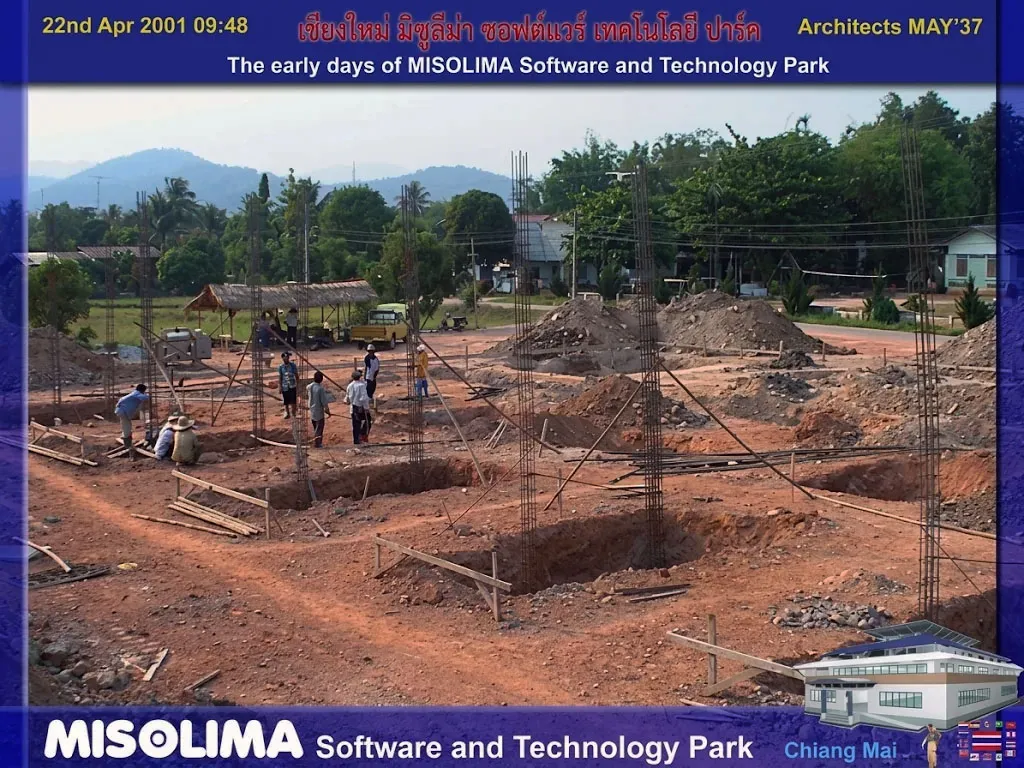
22nd April 2001 - Preparing the Reinforcement Steel
Preparation began with the one-inch-thick steel reinforcement bars for the building's structural columns. Before proceeding with the foundation work, the completed footings had to undergo inspection to ensure they met the required construction standards. Once approved, the foundations would be enclosed with plywood formwork, ready for the concrete to be poured and set.
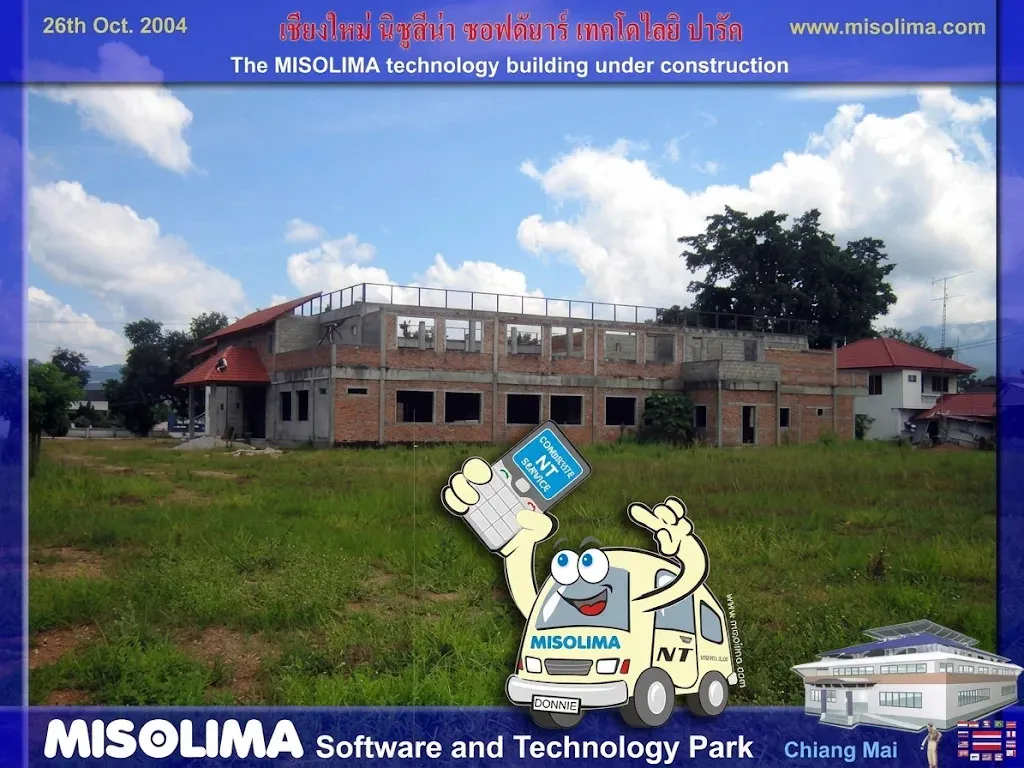
26th October 2004 - A Long-Term Construction Project
Building a 1,600 m² facility on a 12,000 m² plot of land was never going to happen overnight. A project of this scale required considerable financial resources, careful planning and time. There was also another important factor: Fiko Software Co., Ltd. already had its offices and Research & Development (R&D) centre operating in the city centre of Chiang Mai.
The company was based in a four-storey building, where its software engineering and embedded systems development took place. This was where the day-to-day business operations and technological research continued while the ambitious plans for the future technology park gradually took shape.
Consequently, developing the new site became a long-term undertaking, progressing as resources and circumstances allowed.
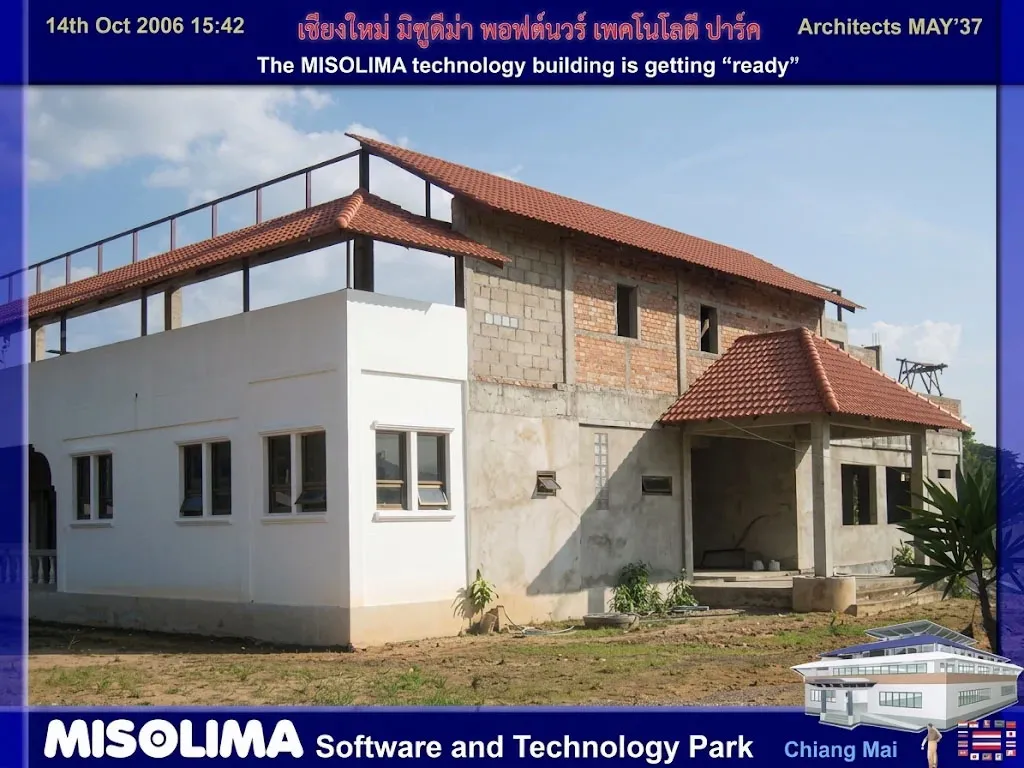
14th October 2006 - Progress by October 2006
By October 2006, the building had begun to take on a more recognizable shape. Part of the front façade had been completed and painted, and some of the windows had been installed, giving the structure a more finished appearance.
Three main sections of the building had also been completed: the commercial kitchen intended for the FELIX Restaurant, the restaurant itself, and a large storage room with an adjoining toilet facility.
Although much of the overall construction was still unfinished, these completed areas represented an important milestone. For the first time, parts of the building were becoming functional spaces rather than simply a construction project.
15th October 2006 - A Home for the Caretaker
At the beginning of October, we decided to remove an old shed on the property and replace it with a charming little house for the future caretaker. The new building was designed to provide everything needed for comfortable day-to-day living, with its own kitchen, a combined working and living area, and a small separate bedroom.
It was a practical addition to the property, ensuring that someone could live on-site, look after the grounds and keep an eye on the ongoing development of the technology park.
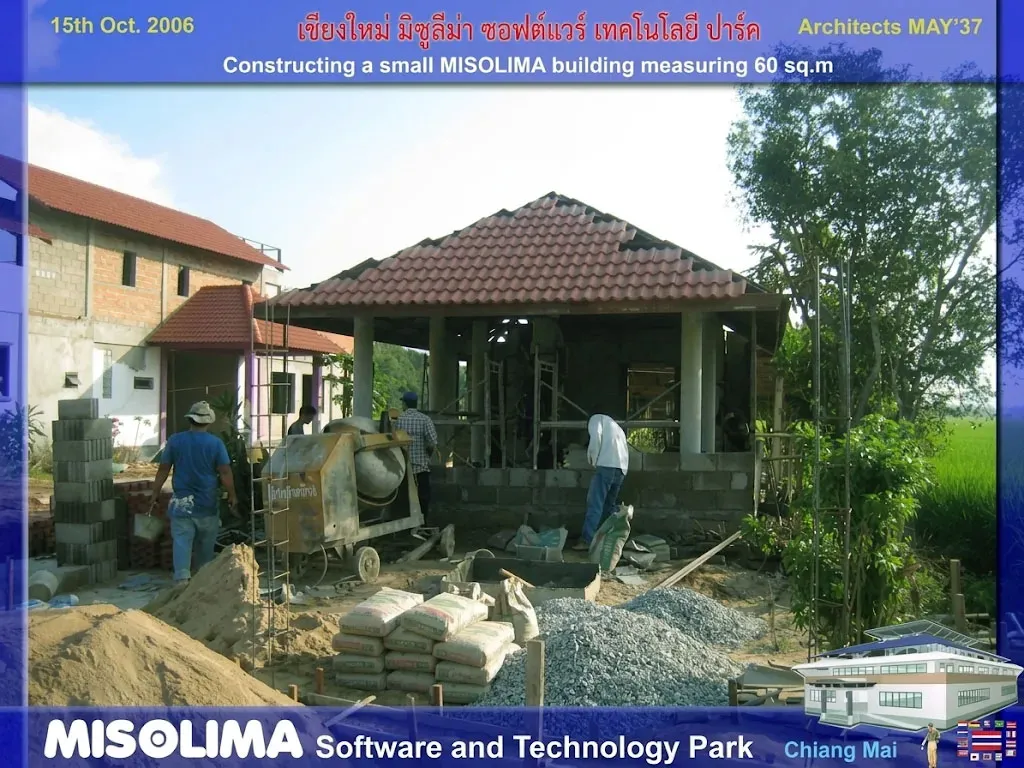
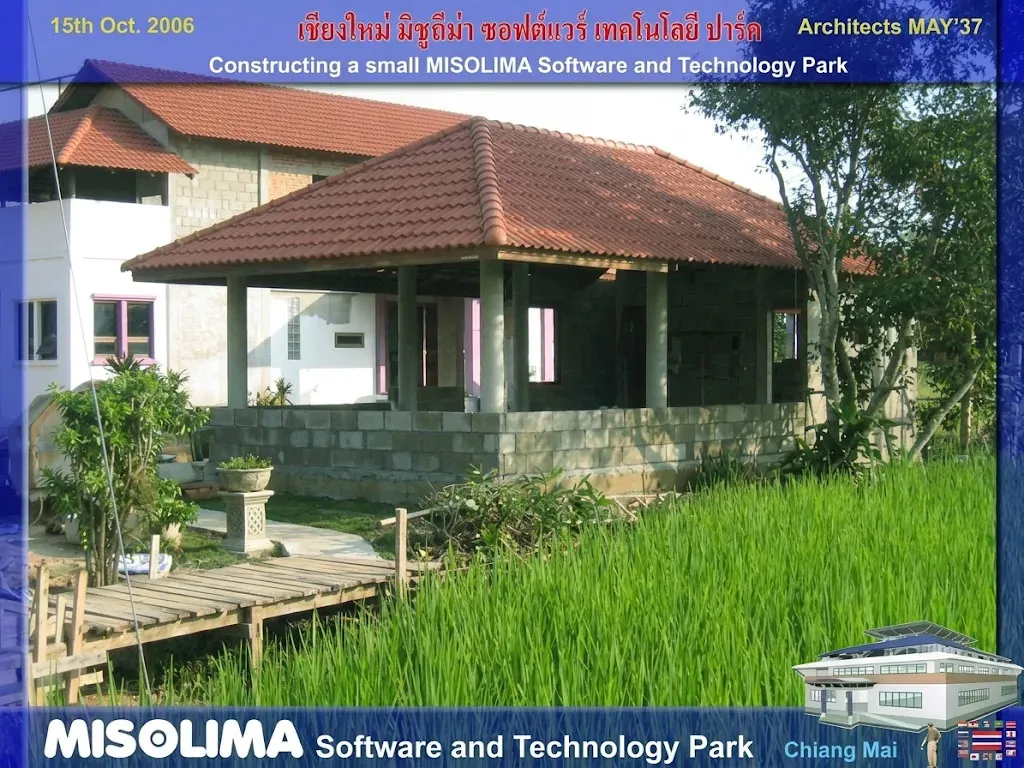
15th October 2006 - Building the Caretaker's Home
The construction of the caretaker's home progressed surprisingly quickly and took only a few days to complete. Our original idea was to build a tiny house at the back of the property, with an open front. However, as the plans developed, we realised that enclosing the entire structure with walls would make much better use of the available space and provide a more comfortable living environment.
We therefore changed the design and built walls all around the house, creating a fully enclosed home with considerably more usable living space. The finished building had a total floor area of 60 m², making it a practical and comfortable little home for the caretaker.
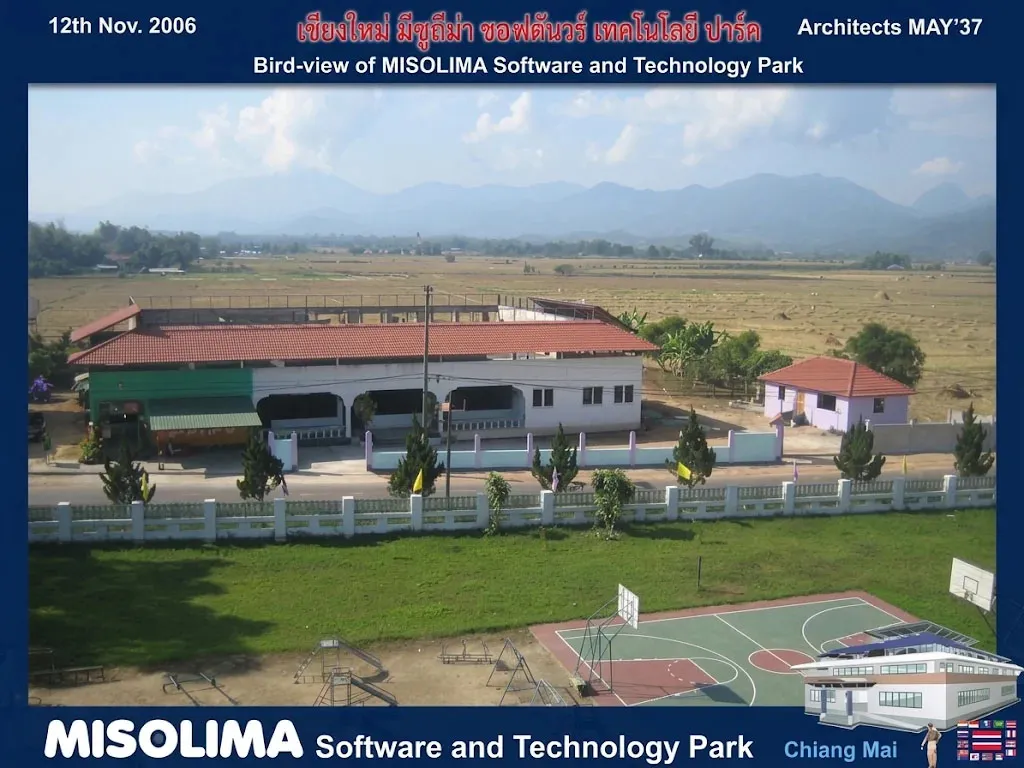
12th November 2006 - An Overview of the Property
This photograph provides a good overview of the project and its surroundings. In the foreground, we can see the main road, while the schoolyard and open fields are visible in the background. By this stage, the perimeter fence had been installed and painted, giving the property a more defined and finished appearance.
The caretaker's home can also be seen on the right-hand side of the photograph. With the house completed and the fencing in place, the property was beginning to take on the appearance of an established site rather than an ongoing construction project.
The Development of the MISOLIMA Main Building
Construction of the MISOLIMA main building commenced in 2001 and continued over several years. The extended construction period was primarily due to FIKO Software Co., Ltd.'s commitment to developing the project entirely through its own financial resources, without relying on external loans or borrowings.
The company successfully financed the construction of two buildings using revenue generated through its own research and development (R&D) activities in software engineering and embedded systems. This approach reflects FIKO Software's long-standing philosophy of self-financed development, technological innovation and sustainable growth.